Resident Evil Requiem Review: A 30-Year Horror Triumph
Resident Evil Requiem review: Grace and Leon return in Capcom’s thrilling horror-action adventure with dark atmosphere and a stunning comeback.
Enjoying this? Sign up to earn credits just for reading. Create free account
Resident Evil Requiem
Released: February 27, 2026
Developer & Publisher: Capcom
Platforms: PC, PlayStation 5, Xbox Series X|S, Nintendo Switch 2
Thirty years ago, a clumsy door animation and a mansion full of shambling corpses accidentally founded a genre. Three decades later, Capcom has spent that legacy wisely and recklessly in equal measure survival horror one year, popcorn action the next, sometimes both inside the same game. Resident Evil Requiem, the ninth mainline entry, is the studio finally admitting that it no longer has to choose. It is two games stitched into one body, and rather than tearing itself apart, it becomes the most complete celebration of the series I have ever played.
I should be honest about where I stand. I am not a lore archivist who can recite the corporate genealogy of Umbrella from memory, but I have lived through enough of this franchise the cramped dread of the early entries, the swagger of Resident Evil 4, the first-person panic of RE7 to recognize when a game is reaching backward with love rather than desperation. Requiem reaches with love, and it usually grabs hold of something worth keeping.
A Story Told From Two Sets of Eyes
Requiem hands you two protagonists and asks you to feel two completely different emotions.
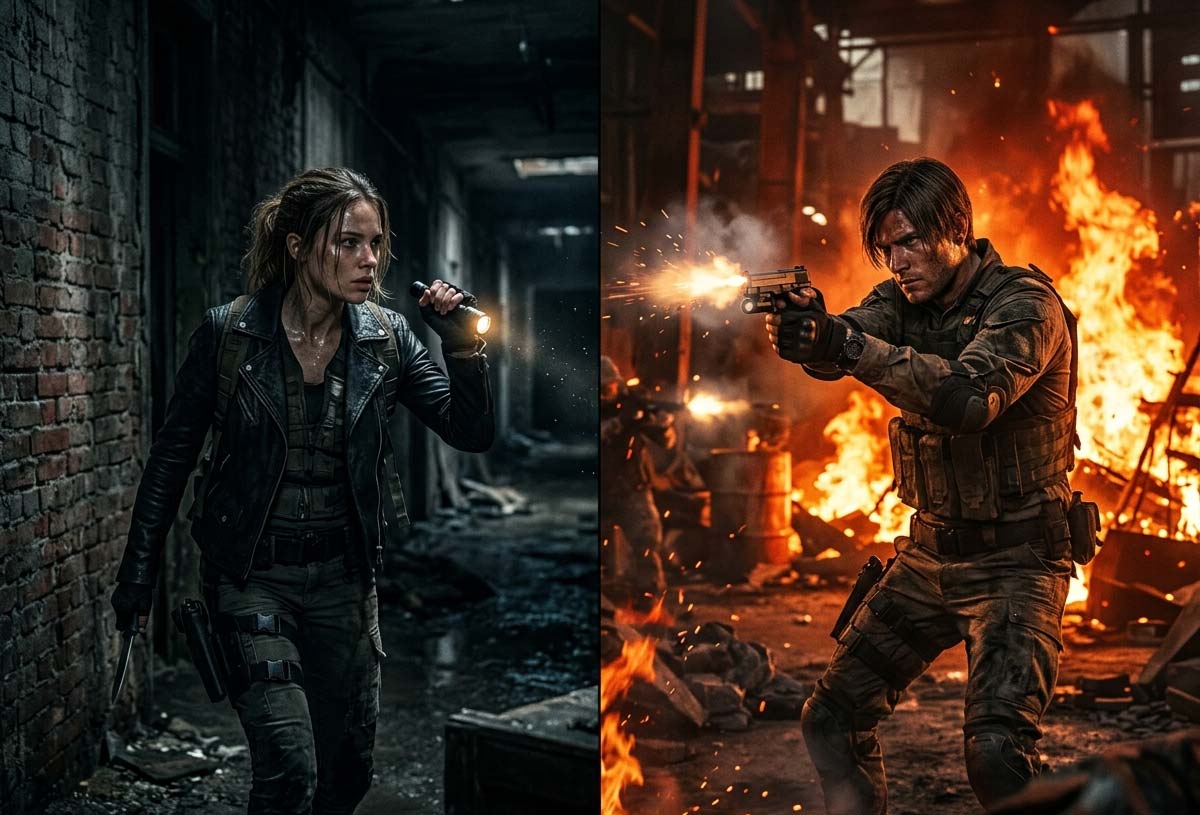
The first is Grace Ashcroft, an FBI investigator with a quiet voice and a loud past. She arrives at a derelict care facility tied to her mother's death, only to be pulled into the orbit of Victor Gideon a researcher haunted by the ghost of Umbrella's founder and by the failing science he has injected into his own body. Gideon is convinced Grace is the key to a bioweapon called Elpis, and from that conviction the nightmare spirals outward.
The second is Leon S. Kennedy, older, scarred, and carrying an affliction of his own. He chases Gideon for personal reasons, and his arrival turns a rescue into a reckoning with the places and monsters that defined his career. The game cuts between the two with timestamped precision, and what could have been whiplash instead becomes rhythm. You are never lost. You always know what the other half of the story is doing while you sweat through your own.
What impressed me is how clearly the two halves were designed to need each other. Grace's terror is the fuel that makes Leon's confidence feel earned, and Leon's bombast makes Grace's vulnerability feel sharper by contrast. Played alone, either side would be good. Braided together, they comment on one another in a way few games attempt.
The narrative is not flawless. It is plainly laying track for wherever the series goes next, and a couple of long-running threads are tugged but never tied. The two central villains, in particular, are the weakest link more delivery mechanisms for nostalgia and lore than characters with menace of their own. They never quite earn their place beside the franchise's memorable monsters. But the emotional throughline mortality, failure, and the stubborn need to keep one promise before the end lands with surprising weight. By the credits, I cared about both of these people, and that is not something I expected walking in.
Two Genres, One Controller
Before the game even begins, Requiem does something quietly generous: it lets you choose your camera. Grace defaults to first person, Leon to third, but you can swap either. I tried the alternatives out of curiosity and then went straight back to the defaults, because they are obviously correct. Grace belongs behind your own eyes, where every creak and every wet shuffle in the dark is yours alone. Leon belongs over the shoulder, where you can watch him move like the action hero he has spent thirty years becoming. That the options exist at all and that they all genuinely work is a kindness the genre rarely offers.
Grace: The Horror
Grace's chapters are Requiem at its most frightening, and they are the reason I will remember this game. She moves carefully, breathes unevenly, and breaks into a nervous half-run rather than a sprint when things go wrong. Her fear is contagious. The facility she explores is dense, dark, and intelligently looped, so that being hunted never collapses into the cheap dead-ends that plagued older stalker sequences. There is always an out if you are clever and calm enough to find it.
Her resources are thin and her inventory thinner, so combat is a negotiation rather than a solution. She carries a sidearm and can craft throwables and traps, but the smarter play is usually to slip past trouble. The zombies here are the best the series has produced not just because they look revolting, but because they talk. Each one echoes the person it used to be: a doctor muttering excuses, a worker insisting the lights stay off after dark. That last detail isn't just flavor; you can lure a light-obsessed zombie by flipping a switch and stealth past while it shuffles off to fix the "problem." It is creepy, characterful, and genuinely useful, and it makes every encounter feel staged with intent.
Then there are the bodies that refuse to stay dead. Leave a corpse too long and it convulses into a Blister Head, faster, tougher, and meaner than the Crimson Heads that traumatized players decades ago. Suddenly clearing your kills isn't tidiness, it's survival, and it changes how you move through a space you thought you had cleared.
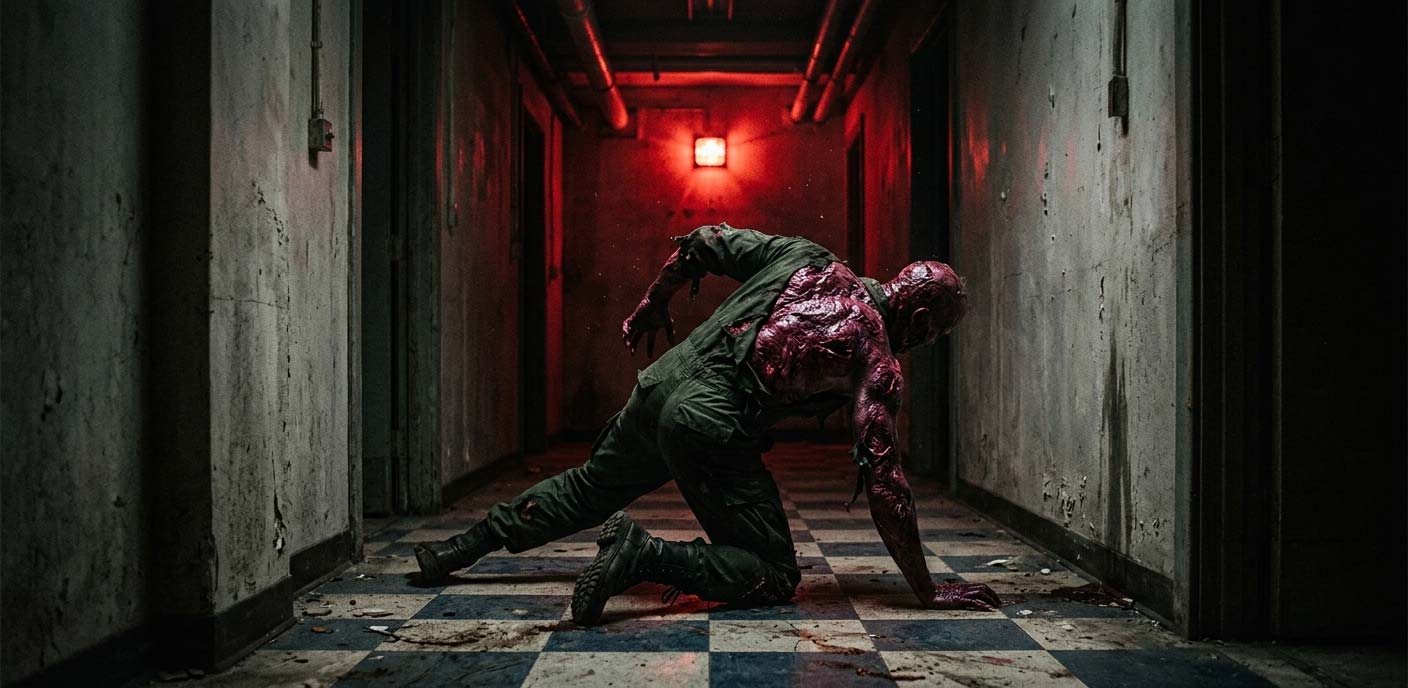
Leave them too long, and they come back worse.
Leon: The Action
Switch to Leon and the game exhales. After hours of holding your breath as Grace, tearing through the same kind of hallways with a shotgun and a bottomless inventory is pure catharsis. His toolkit is a joy: a hatchet that parries nearly anything a grab, a charge, even a thrown cinderblock, and the Requiem, a revolver that ends most arguments in a single deafening shot. The combat loop of stagger, kick, and brutal finisher is grisly and never stops being satisfying.
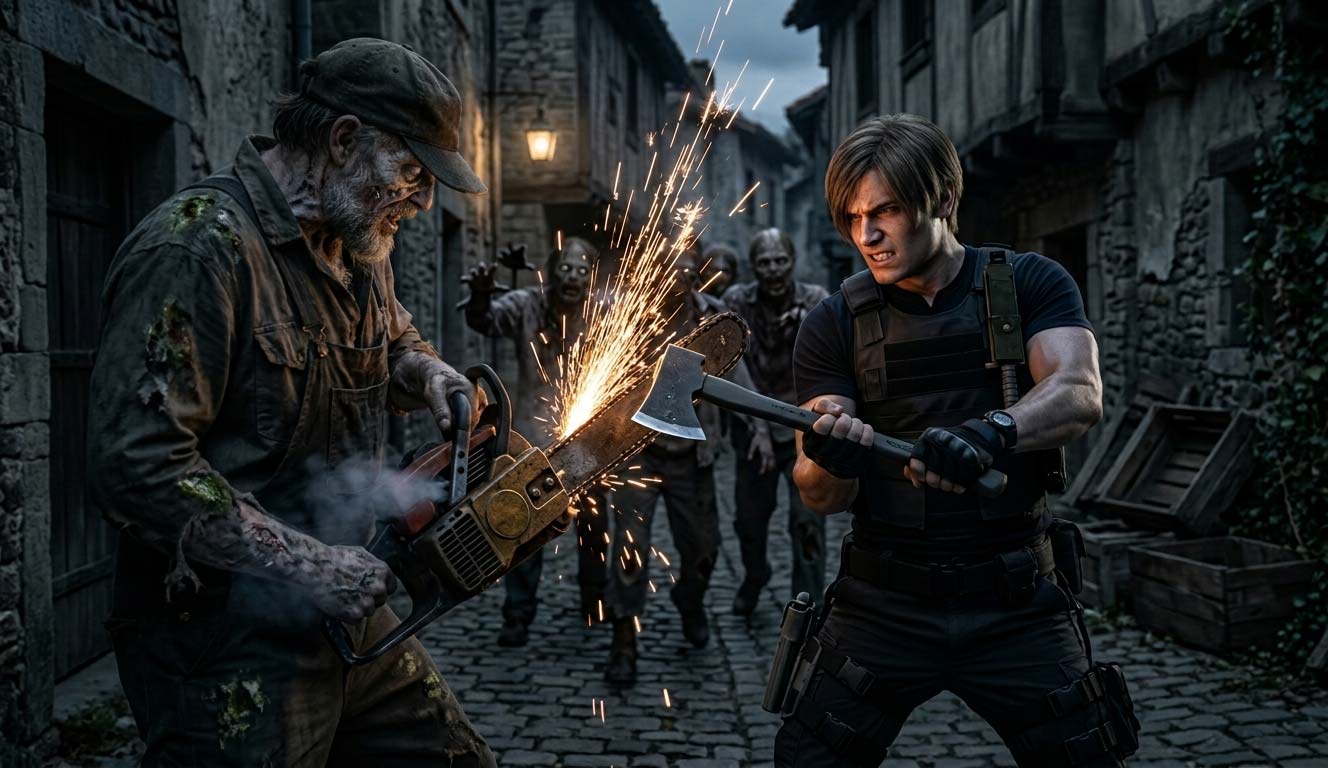
The hatchet turns every attack into an opening.
The detail work is exceptional. Leon adjusts his grip when enemies crowd him, his reloads count individual rounds, and his one-liners land with the dry confidence of a man who has done this too many times to be scared anymore. His sections lean hard on the Resident Evil 4 playbook, and that is both their strength and their ceiling. A few set pieces are unforgettable; others feel like polished echoes of moments the series already perfected twenty years ago. And while the bosses are dramatic on paper some of them deeply meaningful to longtime fans they fold far too easily, especially once you remember the Requiem is in your pocket. The series still struggles to make its action-mode climaxes as tense as its quietest horror corridors.
The Connective Tissue
A neat wrinkle ties the two halves together: the work you do as Grace ripples into Leon's run. Zombies she doesn't kill are waiting for him; resources she hoards are resources he won't find. In practice the economy is forgiving enough that hoarders will rarely suffer for it, beyond a few trips back to the storage box. It's a clever idea that I wish bit a little harder, but seeing the aftermath of my own paranoia as Grace play out under Leon's boots was a genuine pleasure.
Grace's crafting deserves a mention, if only because it is the game's strangest swing. She can harvest blood from fallen enemies, from buckets, from grim mounds in the environment and refine it into ammunition and tools. Tied to the story's ideas about memory carried through blood, it makes thematic sense. Mechanically, scavenging gore to load your gun is unsettling in a way that mostly works, even when the places you find that blood get a little ridiculous.
Sound, Sight, and Performance
The RE Engine continues to be one of the most reliable tools in the business. Requiem is the best-looking game in the series meticulous lighting that builds dread in the horror chapters and frames the chaos in the action ones, gore that is genuinely shocking, and environments that range from rotting decay to eerie sterility. On my mid-range PC it ran at a locked, clean frame rate after the game auto-tuned itself to my hardware, with no crashes and no bugs across a full playthrough. Capcom's optimization remains a quiet master class that more studios should study.
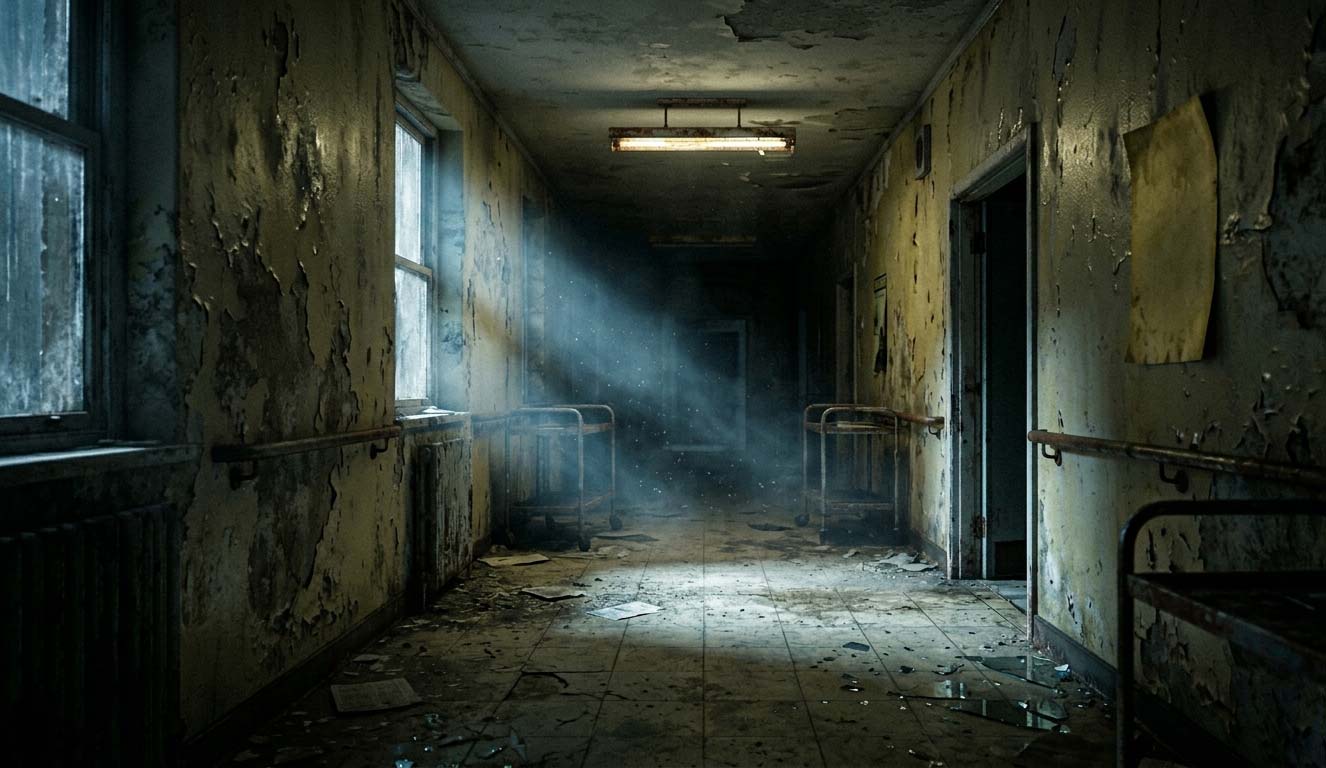
The RE Engine turns decay into dread.
The audio is where it truly digs into your skin. Played with headphones in a dark room, the layered ambience zombies grinding their teeth in the next room, a "singer" wailing from the floor above is suffocating in the best way. And the performances carry it. Angela Sant'Albano's work as Grace is the standout, a stuttering, breathless, fully human portrait of fear that channeled straight into me whether I was watching a cutscene or staring down a corridor through her eyes. Leon's familiar swagger anchors the other half. Together they sell a story that the writing occasionally only gestures at.
Length, Value, and the Elephant in the Room
This is the conversation everyone is having: Requiem is short, and games are expensive. A focused run lands somewhere in the low double digits of hours; a thorough one with all the optional content stretches further; a determined speedrunner can apparently see the credits in an afternoon. Because you are effectively playing two half-games, the brevity is more noticeable than usual.
I'll plant my flag here: the quality more than justifies the length. Requiem never overstays its welcome, never pads itself with filler, and respects your time in a way bloated open-world epics rarely do. There is meaningful post-game content, harder remixed difficulties, and a stack of unlockable weapons to chase, though I'll admit the replayable extras are leaner than I'd have liked from a series with such a rich history of bonus modes. I finished, immediately wanted more, and consider that a compliment rather than a complaint.
The Verdict
Resident Evil Requiem is a game at war with its own identity, and the remarkable thing is that the war makes it better. It opens as a near-perfect survival horror experience and gradually becomes a swaggering action sequel, and depending on which half you came for, your mileage will vary. The pacing wobbles in the middle, the villains underwhelm, and the story leaves a few threads dangling for a future it clearly already has in mind.
None of that dimmed my enthusiasm. This is a confident, gorgeous, lovingly assembled tribute to thirty years of nightmares a game that understands exactly why people fell in love with this series, in all its contradictory forms, and tries to honor every one of them at once. It is not the most innovative Resident Evil. It might be the most complete one. For a franchise turning thirty, there is no better way to blow out the candles than in the dark, with the surround sound on, terrified and grinning all at once.
Score: 9.5 / 10
A celebration of everything Resident Evil has been, and a confident step toward whatever it becomes next.
Create a free account to react and start earning credits. Sign up


Be the first to comment (0)
Sign in to comment — you'll come straight back here.